
The Pyramid of Ameny Qemau: "We knew the foot!"
In the photo of our research group below, you will notice a small block with a hole in it, sitting on a very large block. Since there is nothing resembling the pyramid that once stood in this spot, our investigation here involved measuring these two blocks...
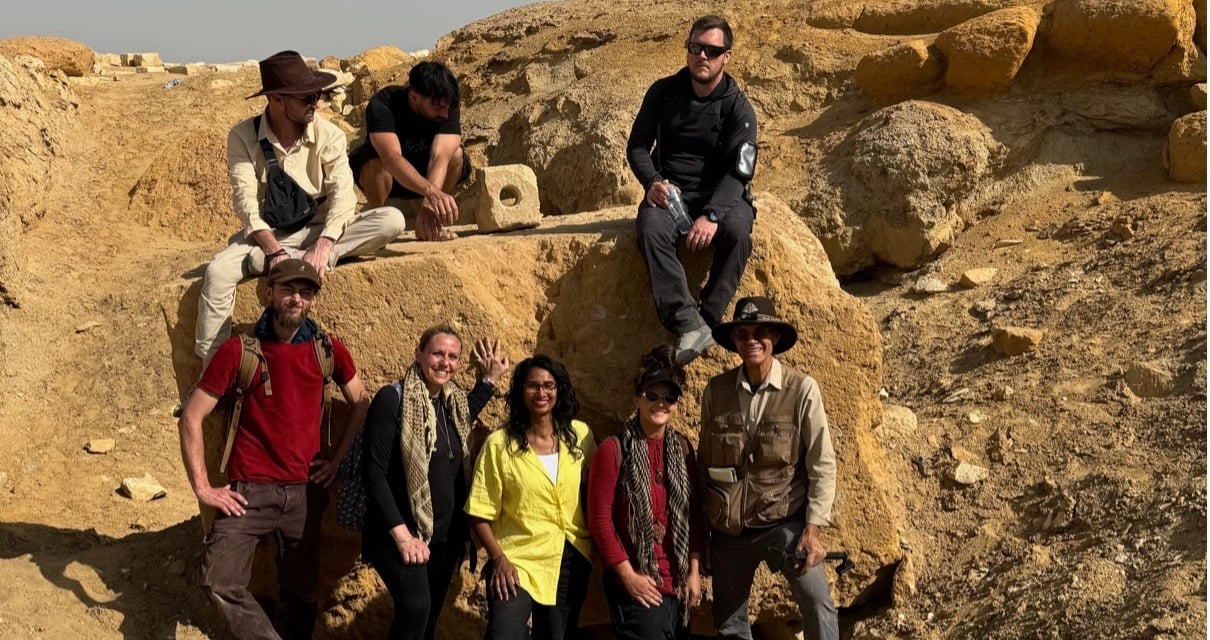

The large and small blocks at Ameny Qemau
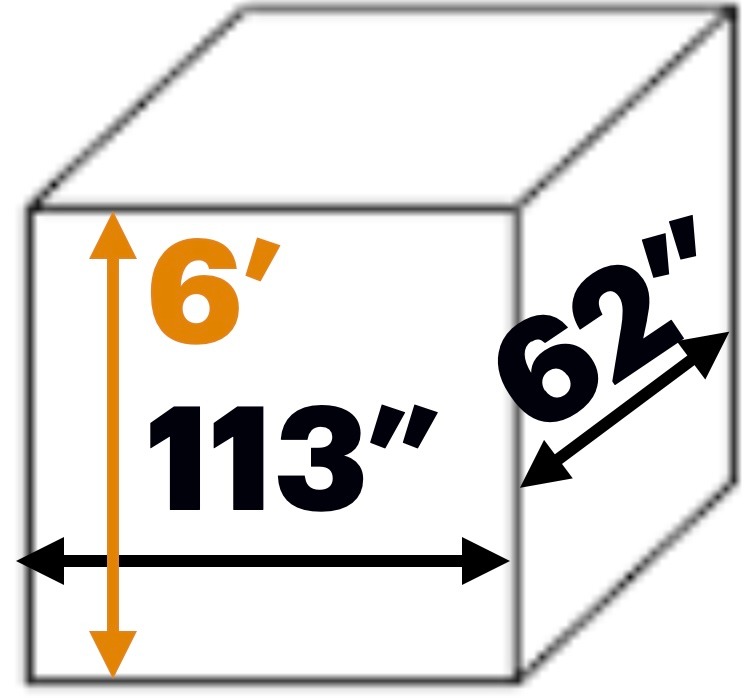
The large block
Ameny Qemau is an Egyptian Pharaoh I had never heard of. When we were in the Dahshur area, I had programmed several locations into my GPS watch (Garmin Instinct) that I had seen on Google Earth, but never traveled to before. One of them was the pyramid of Ameny Qemau. After we left the Lost Pyramid (link) I followed the directions my Garmin gave me for us to walk to Ameny Qemau. I had no idea if we would be allowed access to it, I had no idea what would be there. When we arrived at the position the Garmin indicated, there was certainly no pyramid in sight. You can see from the photo here what we were confronted with. There were some ruins, apparently from the pyramid that once stood there.
Attention to that photo will show you two stones of note. The very large one we are gathered around, and then the small cube with a hole sitting on its top. These two provided some very interesting findings.
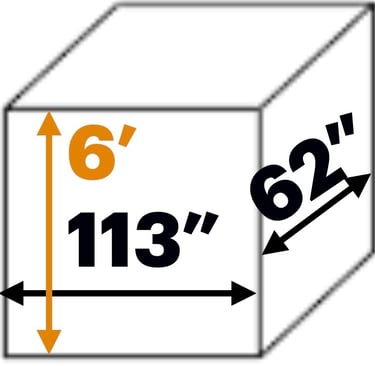
We measured the large block and found its dimensions to be 62” by 72” by 113”. These three values immediately caught my eye. 72” is 6’. It seems the ancient sage who designed the block was telling us he knew the imperial foot. Most educated people would immediately dismiss this idea, because the Imperial system and its use of the inch and foot is surely relatively modern, and so of course the length of exactly 6 feet for this block was coincidental. But because I have studied the work of leading metrologists such as Harry Sivertsen, John Neal, Algernon Berriman, and John Michell, I know there is much evidence for the use of the foot anciently. It is only called the British foot because it was used widely in the British Empire. Some metrologists have claimed that the foot and inch might be the aboriginal unit of measure.[1] Enoch was the patriarch and sage who is considered the architect of measure, and the original polymath. (The same way that Thoth and Hermes are the mythical embodiment of number and measure.) And I have conjectured that the ultimate etymology of the word inch goes back to Enoch. No vowels were used anciently, so Enoch would be “nch.” And inch would also be “nch.” The use of the term “inch” in different measuring systems throughout time, is, I believe, a memorial to the original metrologist, Enoch, the same way Lincoln’s face appears on every American penny. So, I believe that the exact 6’ length of this large block is significant. It is a recognition that the foot was known in ancient Egypt.
The next side length, the 62”, is almost exactly 3 royal cubits, the common unit of measure throughout ancient Egypt. Since one side was exactly 3 cubits you might expect the other main dimensions to be in cubits. But no. There is this choice the stone’s designer made to show us a side with an even number of English feet. This block, because of its large size, is sending a message that it is to be measured. One dimension gives 6 English feet, and the other dimension gives 3 royal cubits. What about the third measurement?
The third dimension, 113”, is given neither in even feet nor cubits. J. Ralston Skinner, in his work Key to the Hebrew-Egyptian Mystery in the Source of Measures shows that 113 was known by the ancient Egyptians as the lowest whole number diameter that yields an integral whole value for a circumference: 355. The formula for calculating the circumference of a circle from a diameter is simply:
πD = C
If you take every number starting with 1 and multiply it by pi (π), looking for a whole number result, you will exhaust the numbers 1 through 112 with no success. But when you multiply 113 by π you get 355 to 99.9%. It is time to begin harvesting more fully the messages which ancient sages programmed into their megaliths and architecture generally. I believe this large block from Ameny Qemau was left for us to encounter and decipher.
The 113” length of one of the sides of this large block, taken as a diameter, indicates that the Egyptians had some kind of practical knowledge of π. Because the 113” length only seems to have significance because of its relation to the circumference value of 355”. The 355” can only be derived if the 113” diameter is multiplied by π or one of its close approximations such as 22/7.
Ralston claims the Egyptians viewed 113 as the male organ, represented by a 1 and the 355 was female represented by a circle, 0. Thus the number 10 combined the idea of male and female creativity. The Egyptians developed the first base 10 numeral system in the world. 10 was connected to a whole family of 1s and 0s: 1000; 10,000; 100,000; and the number 1,000,000, considered to be the largest number possible, associated with the god Heh, god of infinity. Ralston makes much more of the number pair 113/355, connecting it to the most profound concepts extant in the ancient world, including Genesis 1:1, the correlation of natural time periods, the Garden of Eden, and the origin of mythology.[2]
So please forgive us for thinking that the measure of one side of a huge block as 113” seemed like a big deal. Because it does seem like a big deal! One side of the block points us to the cubit, the royal measure for ancient Egypt, another side points us to the imperial system of measures, and the third side points toward a circle. The circle has no beginning and no end and as such can act as a representative of eternity. Eternity can be viewed as a measurement of time, the ultimate time.
This block is telling us that the ancient systems of measure are connected to time and eternity. This ancient block may be announcing what we consider a very modern concept: that time and space are on the same continuum. Maybe that is not such a modern idea!
-----------------------
[1] The inch and foot are directly related to the equatorial circumference of the Earth and bear a striking connection with measures of time, indicating their primordial connections. See the work of Melissa Campbell, for instance, in her piece, “Earth Measures and Squaring Circles”, https://www.academia.edu/124200201/Earth_Measures_and_Squaring_Circles
[2] J. Ralston Skinner, Key to the Hebrew-Egyptian Mystery in the Source of Measures”, Appendix 1, www.eGibil.com, copyright 2021.
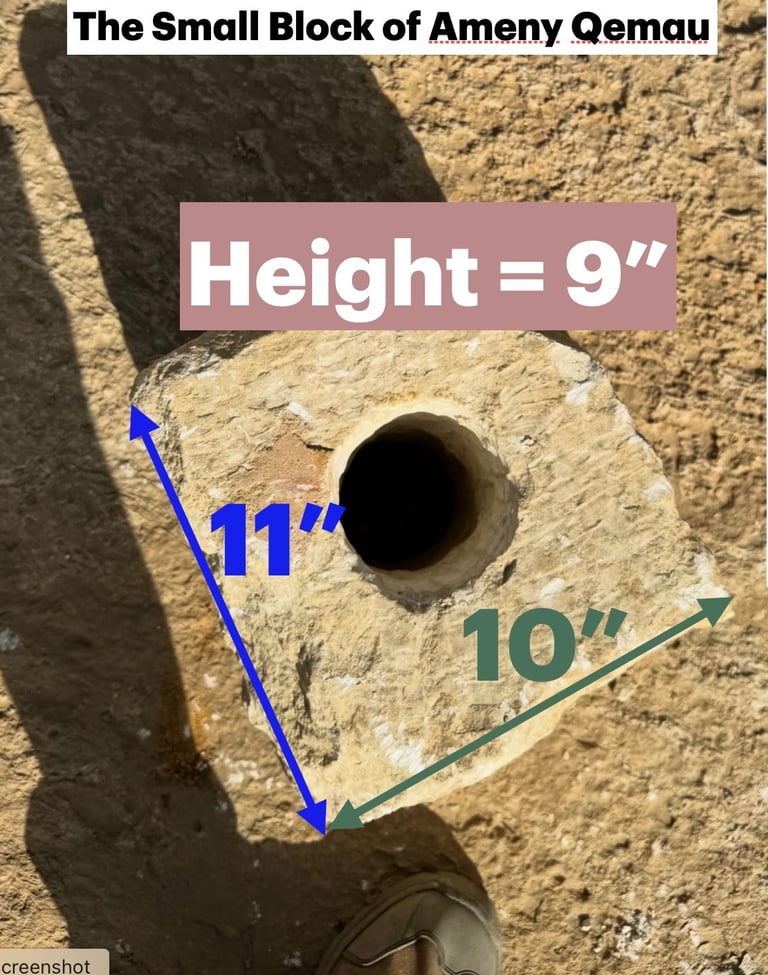
The small block
Just as the large block yielded messages in its measures, this small block also had a story to tell. The block did not have whole number dimensions if measured by the Egyptian standard, the royal cubit. It did however when measured in the imperial unit, the inch! Notice the 3 dimensions of the block are 9", 10" and 11"!
This again seems to point to intentionality. The Egyptians seem here to be pointing again to the imperial system of measures, specifically the inch. Dennis Payne has shown in his work of the monuments all over in Egypt, that measurements using the imperial inch are everywhere embedded, hiding sacred geometry and astronomical knowledge. You can see Payne's work on Academia here.
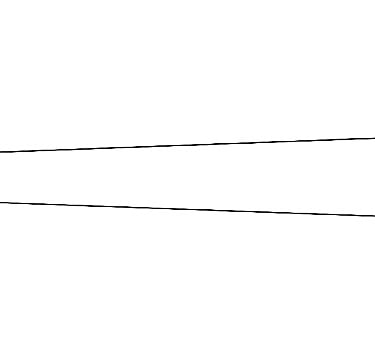
Furthermore, the hole in the block reduces from 4" to 3.75" over the course of the 9" height. Pictured above shows the long tapered cone this points to. It would be exactly 12 feet long (144"). So the Egyptian sages who did this block were encoding the number 12 in this cone, so that we have 9-10-11-12. 9", 10", 11" and 12'.
Another possible revelation hidden in this little block is the tapered cylinder, the hole, that runs through the block. The volume of the block without the hole would be 990 cubic inches. The volume of the hole (a tapered cone) is just over 99 cubic inches. So the hole is 10% of the volume of the whole block if it were solid.
So much ingenuity tucked away in the little and big blocks of Ameny Qemau!

Secrets
Explore ancient wisdom through sacred geometry, prophecy and megalithic design.
seek Wisdom
Journey with us
© 2025. All rights reserved.